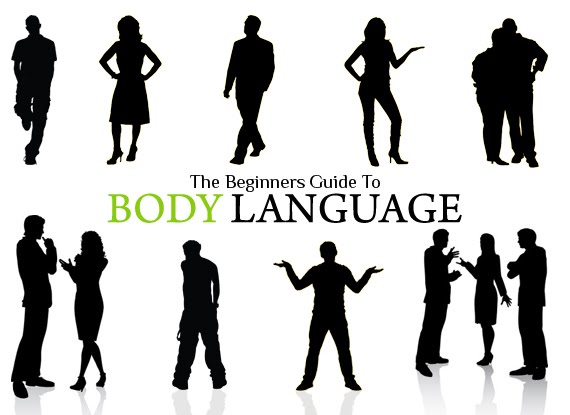
If you are single and looking for love, here is a fact that might surprise you. Ninety percent of what you say to the people you meet is non-verbal. Very often we give clues and signals to those we are attracted to without even realizing it.
Being able to read body language can give you clues as to whether someone has a romantic interest in you or not. By accurately reading their body language you will be able to determine if the other person is feeling comfortable around you and eager to get to know you better.
1. How close a person stands to you can be one of the most important body language clues to whether someone is interested in you romantically or not. Their proximity to you can be directly proportional to their romantic interest in you. In other words the closer they stand to you the more interested they are in you romantically and the farther they stand away from you the less interested they are in pursuing a romance with you.
2. When a person crosses their arms, it may mean any of the following:
a) When You're Talking - They may not agree with what you said, and may be doubting or suspecting you. They may have a bad impression of you and may not wish to continue talking with you. It may also depict arrogance or defensiveness.
b) When Their Talking - They may be hiding something from you, or may even be lying. A person engages in this protective posture when they feel anxious or nervous.
c) They might just be feeling cold.
3. Body positioning can also be a form of body language that can either convey romantic interest or disinterest. When speaking to someone, if their body and particularly their torso is turned towards you and leaning closer to you this is an indication of romantic interest. This body positioning leaves you unguarded and vulnerable which indicates trust in the other person.
4. Your eyes often send body language messages to those around you letting them know whether or not you are interested in them. When you have a romantic interest in someone you make eye contact and also blink often. Both of these signals let the other person know that you are attracted to them by conveying the message that you are interested in what they have to say.
Avoiding eye contact lets a person know that you are not comfortable with them and that you do not have a romantic interest in them.
Remember that it may take some time to really read people in this way. Also remember that as you are looking for signs of attraction to be aware of the signals that you are sending out as well. Keep in mind that this is not an exact science. The general idea is to look for many signs together to give you a clearer picture of a person's interest or intentions.
Monday, August 16, 2010
Friday, August 6, 2010
What Are Your Relationships Saying About You?
Do you find yourself attracting the same relationship issues into your life? Your life and relationships are a perfectly polished mirror for what is in your sub consciousness.
Mirror, mirror...
If you ask your mirror the questions, "What are my best attributes?" or "What are my flaws?" there's a limitation to the accuracy of your reflection. After all it's just you - evaluating you. But, if you take the same approach and incorporate relationships into your evaluation, patterns will emerge - and the picture is likely to become much more complete.
One concept having to do with this is, "When you don't like something in someone else, it's reflecting something within yourself that you don't like." You might have heard about this principle, and wondered about it, as I have. How could it be? I didn't like people who are liars or super into themselves. Did that mean that somehow I was being that way? Try as I might, I couldn't see that in myself. It has taken me many years of observation and contemplation before I have finally made some sense out of it.
Whenever you don't like a trait in someone else, it's usually reflecting something within you that you've concealed from yourself. It also may be that you recognize the potential for that trait within yourself, and don't like it. You don't have to act on those attributes you don't like. But when you find out how the qualities you dislike are expressing in you, and accept them, the energy around them melts away. You no longer have to attract people who are reflecting the parts of you that you've masked.
The Universe simply sent these relationship issues into your life as sign posts to teach you to accept yourself. All of yourself. The Universe accepts you unconditionally as you are. Wouldn't you want to accept yourself as much as the Universe does? This is a very empowering realization.
Mirror, mirror...
If you ask your mirror the questions, "What are my best attributes?" or "What are my flaws?" there's a limitation to the accuracy of your reflection. After all it's just you - evaluating you. But, if you take the same approach and incorporate relationships into your evaluation, patterns will emerge - and the picture is likely to become much more complete.
One concept having to do with this is, "When you don't like something in someone else, it's reflecting something within yourself that you don't like." You might have heard about this principle, and wondered about it, as I have. How could it be? I didn't like people who are liars or super into themselves. Did that mean that somehow I was being that way? Try as I might, I couldn't see that in myself. It has taken me many years of observation and contemplation before I have finally made some sense out of it.
Whenever you don't like a trait in someone else, it's usually reflecting something within you that you've concealed from yourself. It also may be that you recognize the potential for that trait within yourself, and don't like it. You don't have to act on those attributes you don't like. But when you find out how the qualities you dislike are expressing in you, and accept them, the energy around them melts away. You no longer have to attract people who are reflecting the parts of you that you've masked.
The Universe simply sent these relationship issues into your life as sign posts to teach you to accept yourself. All of yourself. The Universe accepts you unconditionally as you are. Wouldn't you want to accept yourself as much as the Universe does? This is a very empowering realization.
Monday, August 2, 2010
The Flake Filter - How to Flake Proof Your Date
It can be extremely aggravating when dealing with flakes. You know what I'm talking about: the "no-show" flakes, or the promising first couple of dates that lead nowhere?
Don’t worry, it happens to each and every one of us. We meet a wo/man, who seems into us, and then, just as we are about to reciprocate they FLAKE. Ugh… our hearts drop. What happened? What went wrong? There is no fail-safe method to preventing this, but there are some tried and true tips to help stave-off the dreaded flake out.
Here we go.
1. S/he asks you out and does not follow through within a reasonable amount of time. There is not much point in asking someone out and not taking action for several weeks. You can expect this kind of behavior in the future.
2. S/he says they'll call and doesn't. If you don't enjoy repeatedly waiting for the phone to ring why put up with it?
3. S/he comes on strong and then as fast as they came on they’re gone. Don’t waste your time with someone who is waffling you deserve to have someone that’s consistent.
When you meet someone you find appealing, always keep in mind that chemistry is simply one element in your assessment process to help determine whether they are partner material. Don’t compromise your values with flakes when dating, apply the 50/50 rule:
• Equally Interested
• Equally Engaged
• Equally Giving
• Equally Attracted
• Equally Concerned About the Growth of the Relationship
In a new relationship there is absolutely no reason to compromise and cross the 50% line. Remember you are the “chooser.” Bring reason into the equation. Take things slow and steady. A relationship is not a race, and indeed running this race too quickly may mean starting all over again because you didn’t take the necessary time to thoroughly screen your partner.
Your ideal partner is your equal and should not be idealized or put on a pedestal. You deserve an amazing mate. Don’t forget it. And don’t forget how amazing you are, with all you have to offer a partner.
Don’t worry, it happens to each and every one of us. We meet a wo/man, who seems into us, and then, just as we are about to reciprocate they FLAKE. Ugh… our hearts drop. What happened? What went wrong? There is no fail-safe method to preventing this, but there are some tried and true tips to help stave-off the dreaded flake out.
Here we go.
1. S/he asks you out and does not follow through within a reasonable amount of time. There is not much point in asking someone out and not taking action for several weeks. You can expect this kind of behavior in the future.
2. S/he says they'll call and doesn't. If you don't enjoy repeatedly waiting for the phone to ring why put up with it?
3. S/he comes on strong and then as fast as they came on they’re gone. Don’t waste your time with someone who is waffling you deserve to have someone that’s consistent.
When you meet someone you find appealing, always keep in mind that chemistry is simply one element in your assessment process to help determine whether they are partner material. Don’t compromise your values with flakes when dating, apply the 50/50 rule:
• Equally Interested
• Equally Engaged
• Equally Giving
• Equally Attracted
• Equally Concerned About the Growth of the Relationship
In a new relationship there is absolutely no reason to compromise and cross the 50% line. Remember you are the “chooser.” Bring reason into the equation. Take things slow and steady. A relationship is not a race, and indeed running this race too quickly may mean starting all over again because you didn’t take the necessary time to thoroughly screen your partner.
Your ideal partner is your equal and should not be idealized or put on a pedestal. You deserve an amazing mate. Don’t forget it. And don’t forget how amazing you are, with all you have to offer a partner.
Monday, July 26, 2010
Do You Struggle With Being Angry?
Have you ever been angry about something that someone did, said or didn’t do? Most likely, you feel that person has done something wrong or is just plain wrong.
When we feel angry, three things are happening. 1) We are upset because we are not getting OUR NEEDS MET. 2) We are BLAMING someone else for not getting what we want. 3) We are about to speak or act in such a way that will almost guarantee we will not get what we need.
Statements from an angry spouse such as: "You’re never home!" "You’re always working!" "You spend way too much time with your friends!" imply wrongness. Keep in mind that other people's actions can never "make" you feel any certain way. Feelings are your warning indicators. Your feelings always result from whether or not your needs are being met. Anger results from focusing your attention on what another person "should" or "shouldn't" do and judging them as "wrong" or "bad."
Stop Blaming and Start Getting Your Needs Met
When you're angry you are likely to have "blame thinking" going on in your head. Inside of "blame thinking" you have emotions and these are caused by unmet needs. When you can get conscious of your "blame statement" you can begin to explore your feelings and use these feelings to get clear about which of your needs are going unmet.
It helps to remember that you can make life enjoyable for yourself and others if you focus your attention on what you need and put aside any ideas of the other as "wrong" or images of them as the "enemy." Make it your goal to attend to your underlying needs and to aim for a resolution.
When your feelings have served their purpose – when your attention is fully focused on your needs and values – then anger melts away.
Ask For What You Need
The beauty of being able to correctly interpret your angry feelings as warning signals is that once you discover what you need, you are back in a powerful position to act toward getting your need met! Instead of throwing out accusations clearly state what it is you need. "I realize I need more companionship than I'm getting." "Would you be willing to agree to spend every Tuesday and Saturday evening with me?"
Give it a whirl. I'd love to hear what your outcome is.
Adapted from Center for Nonviolent Communication www.cnvc.org
Monday, July 19, 2010
How to Write the Perfect On-Line Dating Profile
Your online dating success is partly dependent on your ability to capture the interest and imagination of others through the words you write. While the task of writing a good online dating profile may be daunting for many people, it just takes a little time, effort, and know-how.
Here are some tricks of the trade to get noticed by the people you want, while weeding out the ones you don't:
REMEMBER: A good online dating profile should describe you (40%); the person you want (40%); and the relationship you want (20%)
1. Make the ad unique. Most people stick to generalizations: "I like reading, I love going to the movies or I have a pet". To set yourself apart, reword your ad so it gives out something more, such as "I enjoy Stephen King and Shakespeare, I could watch comedies all day or my dog is my favorite guy". Not only do these little details say a lot more about your personality, but also make you more interesting to the reader.
2. Spell out what you want. Saying you’re looking for a “nice guy” could mean almost anything. Instead, explain what that means to you: a guy who loves cats, who is nice to waiters or who would call just to ask if you got home safe. If career, ambition or a love for the outdoors are important to you, say that too.
3. Don’t Fret About Your Past Dates. Here’s another good writing tip to remember: don’t go on endlessly about your last relationship. It simply smacks of either desperation or bitterness. If your online dating profile suggests you’re still living in the past instead of looking to the future, other members will ignore you in droves. Baggage is so unattractive unless you’re going on vacation.
4. A Picture Tells a Thousand Words. A picture greatly increases your prospects. Many people simply don’t respond to profiles without one – would you? Be open and post a CURRENT and good picture of yourself. Don’t worry that someone you know will see it– after all, the only way they would see it is if they too are looking for someone online!
5. The Headline. Always remember this: The headline is the most important element of your personal ad. It's your first written contact. So make it count.
And to prove how important the headline is, studies have shown you have three seconds to capture the attention with your headline. If it's boring, he/she won't click on it, and they'll move on to the next one.
6. Update and keep it current. You don’t need to rewrite your entire profile each week, but go ahead and change a few key items like the last movie you saw or book you read. Doing this will also continually move you up to the top of the search list for new online daters new to the system.
In the end, remember to be yourself and let others know what you want. It will save you a lot of time and effort and just might pay off! Good luck!
Here are some tricks of the trade to get noticed by the people you want, while weeding out the ones you don't:
REMEMBER: A good online dating profile should describe you (40%); the person you want (40%); and the relationship you want (20%)
1. Make the ad unique. Most people stick to generalizations: "I like reading, I love going to the movies or I have a pet". To set yourself apart, reword your ad so it gives out something more, such as "I enjoy Stephen King and Shakespeare, I could watch comedies all day or my dog is my favorite guy". Not only do these little details say a lot more about your personality, but also make you more interesting to the reader.
2. Spell out what you want. Saying you’re looking for a “nice guy” could mean almost anything. Instead, explain what that means to you: a guy who loves cats, who is nice to waiters or who would call just to ask if you got home safe. If career, ambition or a love for the outdoors are important to you, say that too.
3. Don’t Fret About Your Past Dates. Here’s another good writing tip to remember: don’t go on endlessly about your last relationship. It simply smacks of either desperation or bitterness. If your online dating profile suggests you’re still living in the past instead of looking to the future, other members will ignore you in droves. Baggage is so unattractive unless you’re going on vacation.
4. A Picture Tells a Thousand Words. A picture greatly increases your prospects. Many people simply don’t respond to profiles without one – would you? Be open and post a CURRENT and good picture of yourself. Don’t worry that someone you know will see it– after all, the only way they would see it is if they too are looking for someone online!
5. The Headline. Always remember this: The headline is the most important element of your personal ad. It's your first written contact. So make it count.
And to prove how important the headline is, studies have shown you have three seconds to capture the attention with your headline. If it's boring, he/she won't click on it, and they'll move on to the next one.
6. Update and keep it current. You don’t need to rewrite your entire profile each week, but go ahead and change a few key items like the last movie you saw or book you read. Doing this will also continually move you up to the top of the search list for new online daters new to the system.
In the end, remember to be yourself and let others know what you want. It will save you a lot of time and effort and just might pay off! Good luck!
Monday, July 12, 2010
ARE YOU LISTENING? Keys to Successful Communication
When most people think of communicating, they visualize talking and getting a point across in a clear, effective manner. Speaking or writing to communicate a message is only part of effective communication. The complementary part of communication is listening.
Poor listeners, underdeveloped listeners, are frequently unable to separate their own needs and interests from those of others. Everything they hear comes with an automatic bias: How does this affect me? What can I say next to get things my way? Poor listeners are more likely to interrupt: either they have already jumped to conclusions about what you are saying, or it is just of no interest to them. They attend to the surface of the words rather than listening or clarifying what’s “between the lines.” When they speak, they are typically in one of two modes. Either they are "downloading"—regurgitating information and pre-formed opinions—or they are in debate mode, waiting for the first sign that you don’t think like them so they can jump in to set you straight.
Deep Listening involves listening, from a deep, receptive, and caring place in oneself. It is listening that is generous, empathic, supportive, accurate, and trusting. Trust here does not imply agreement, but the trust that whatever others say, regardless of how well or poorly it is said, comes from something true in their experience. Deep Listening is an ongoing practice of suspending self-oriented, reactive thinking and opening one’s awareness to the unknown.
Discover deep listening
Start with your next conversation: Notice when your mind moves into distracting thoughts, judgments, memories, or interpretations; when you want to say something; when you're trying hard to listen; or when anything takes you out of the moment. Don't judge yourself, feel guilty, or try to figure out why you weren't listening or for how long--just acknowledge it, let it go and gently bring yourself back to listening.
Here are three more tips:
- Have a quiet mind. Relax and let yourself melt into that place where you can just be in the present.
- Have a genuine sense of interest: What is it about this person that I really want to know?
Be aware of the feeling between you and the other person. If it's heading toward judgment, irritation or impatience, then you've moved out of the moment and out of deep listening. Bring your awareness back to the feeling of genuine interest in the other person.
Deep listening offers the following benefits.
- It's calming. It enables us to step outside our problems and clear our minds of personal thoughts. In a sense, it's like meditation--the goal is to let go of thoughts, just let them drift away.
It leads to feelings of connection, caring and compassion. Deep listening allows for a heart-to-heart connection. We more accurately hear what another person is saying--not just the words, but the intent of the words. Seeing past the defenses and external behavior, we experience the other person's true self and discover that it's not unlike ours. This feeling of unity, of non-separation, is the wellspring of compassion.
It helps us to communicate. Deep listening creates true understanding. If people can communicate, they can begin to live and work together more harmoniously, uniting hearts and minds. And that leads to cooperation, and connected relationships.
Monday, July 5, 2010
A LESSON IN LOVING – DEVELOPING RELATIONSHIP SKILLS
The thought of having a relationship is exciting, isn't it? Falling in love, romantic dinners, and passionate sex.
If you’re like me I really thought that simply being in love was all it took to make a relationship last forever. But what I’ve gradually learned over the last 3 years is that maintaining a happy fulfilling long-term relationship requires certain skills.
The same situation exists for millions of other people who start out deeply in love and over time, the love they once shared gradually disappears. It is so sad that we spend our entire lives getting an education in all kinds of other subjects, except in the one area of our lives that has so much impact and importance – relationships.
Knowing what I know now, I understand the reason why the majority of people who fall in love and then start a relationship usually end in disaster. From my training & research, one of the variables you can do something about is the process of learning the Dynamics of Relationship Skills &Management. These are learned skills.
Anybody with desire, commitment and the unending willingness to learn can master this art and science:
- SELF OWNERSHIP - If partners are willing to assume ownership of their feelings and behaviors, a strong healthy foundation is created. If either partner feels bad, they are willing to embrace that feeling as THEIRS, and will communicate that feeling to the other partner as an "I" message. such as, " I am tired, angry, etc."
- GOOD LISTENING BEHAVIOR - Good listening creates an atmosphere of mutuality, respect, self-control, and communication simplicity. In relationships, good listening requires clearing one's mind and hearing the other's utterances with- out any inner clutter.
- EFFECTIVE NEEDS NEGOTIATION - Each partner has their own needs that inevitably will differ from the other partner. This occurs even in highly compatible relationships. Effectiveness in gratifying these needs differences involves the old-fashioned art of compromise. Compromise allows each partner's needs to be gratified in a smaller or postponed measure for the good of maintaining relationship harmony.
- ABILITY TO STAY IN THE PRESENT MOMENT - One of the biggest sources of relationship difficulty is the inability to stay in the present moment. Distortions in the communications process are often caused by the listener contaminating the process with their inner historical issues. Problems they encountered in past relationships influence their behavior with their current partner.
- TOLERANCE OF DIFFERENCES - Any difference between two people is a potential for conflict. Conflict breaks out when needs negotiation fail and tolerance is absent. No two people are alike, even the highly compatible. The most functional relationships strive to neutralize as many incompatibilities between the partners as possible, compromising the differences when possible, and tolerating the differences when not.
- ON GOOD BEHAVIOR FOREVER - A garden needs sunlight, water, nutrients, and bug maintenance, and so do relationships! Often people get the crazy idea that relationships are self- maintaining, and without the necessary active, ongoing care, the garden-relationship withers and dies. We should always be on good behavior in our relationships. Why would we not be! The sunlight, water, and nutrients of good behavior are tact, politeness, and gratitude.
*Tact means thinking about our words and behavior before they are "released" by us; particularly how it will affect our partner.
* Politeness refers somewhat differently to the formal respect and importance we give to our partner, such as please, and thank you.
* Gratitude is an attitude that expresses our appreciation not just for our partner's efforts, but particularly for who they are, and for the radiance they bring to the relationship. Politeness is saying "thank you"; gratitude is being thankful.
- GOLDEN SILENCE - In deep relationships, words are often essential, but at times, words can be COUNTERPRODUCTIVE. The times when Golden Silence should prevail is when words and facts will cause the partner to suffer, and also times when silence can be used to prevent the upward spiraling of conflict, such as a "time out". Silence, however, should never be used as a weapon of chilly anger, withdrawal, or rejection.
- NON-REACTIVITY - Non-reactivity is a special relationship skill that is dependent on one's temperament, communication style, frustration tolerance, listening ability, insight, and humility. It is a challenging skill for some people to develop. Partners who are competitive, immature, litigious, aggressive, or addicted to being "right" are at the highest risk for reactivity. This skill needs ongoing monitoring and perfection, so calmness versus conflict will prevail.
- ABILITY TO INTERNALIZE AND WORK THROUGH CONFLICT - When we are able to solve our problems internally, we sometimes feel some personal discomfort, but we avoid the potentially greater discomfort of drawing our partner into a problem that may be entirely our own. This can create considerable simplicity, when it is either unnecessary or nonproductive to involve our partner in personal conflict resolution. For instance endlessly coming home to someone and complaining repeatedly about the same problem without fixing it can cause eventual damage.
- READINESS TO PROVIDE EMOTIONAL SUPPORT - Firm relationships are maintained when it is clear to both parties that each person is committed to providing the interventions needed to help the other when necessary and appropriate. This indicates active caring that increases comfort and safety between people.
- SENSITIVITY TO PARTNER'S FEELINGS - Sensitivity to the other partner's feelings provides emotional support, but is a far more ongoing state NOT CONTINGENT on a problem situation, but rather a demonstration and commitment because of the other person's importance to us.
A successful relationship is the fruit of caring attention, but don't be hard on yourself when falling short of your ideals. Practice makes perfect...
Best of luck!
adapted from the Relationship Handbook by Jan Maizler, MSW, LCSW
Subscribe to:
Posts (Atom)


